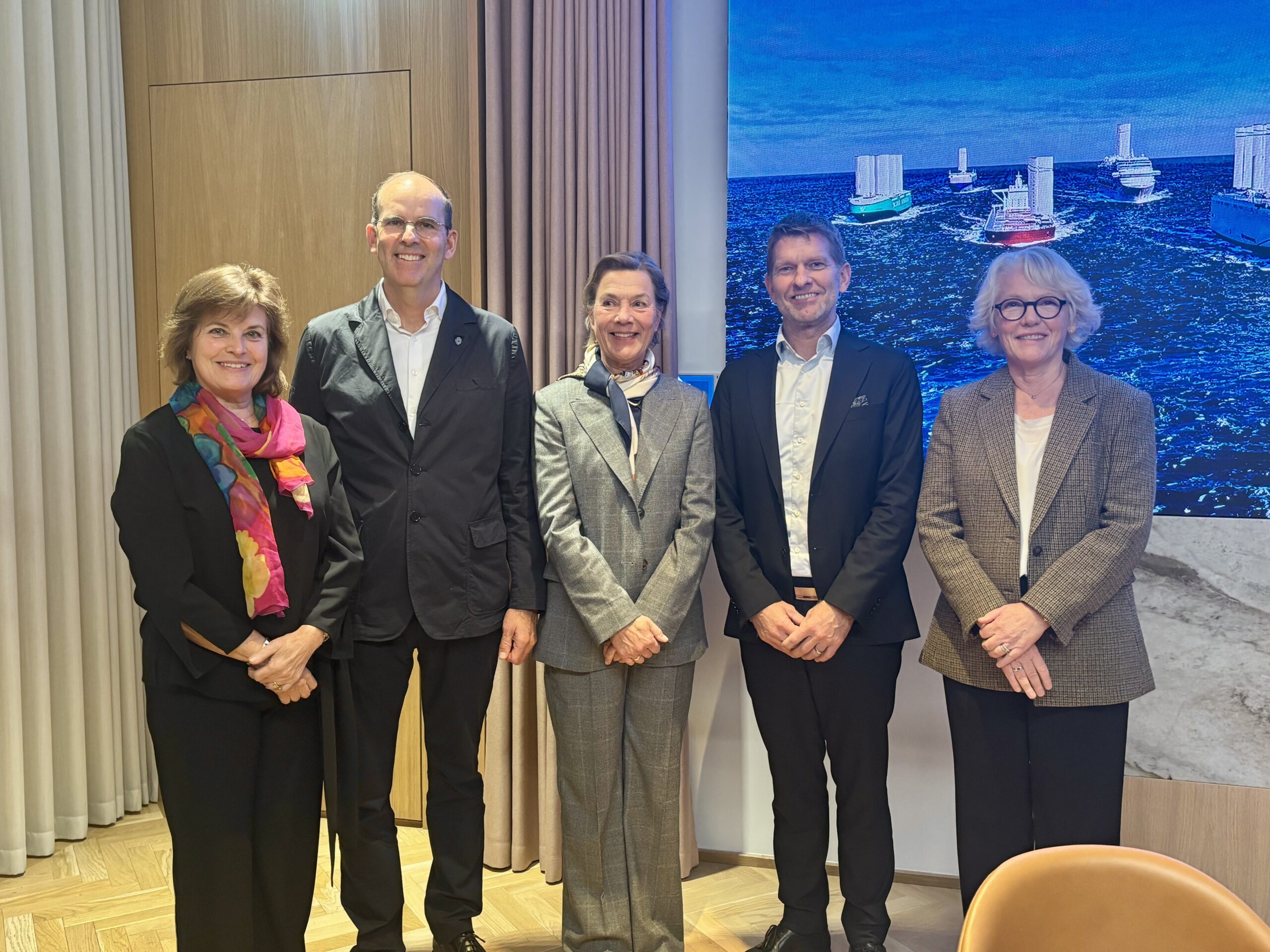


Left to right: Vinge’s CEO and managing partner Louise Brorsson Salomon, partner and moderator Johan Cederblad, Eva-Maj Mühlenbock, former chair of the Swedish Bar Association
Highlights from the seminar
Fair Rules for All
 Nina Macpherson, Chair of Ecocide Law Alliance, emphasised the need for fair competition: companies that strive to act responsibly should not be undercut by those that do not. She also mentioned the benefits of a clear, fair, and predictable legal framework, its positive impact on innovation, efficiency and employee engagement and, not least, that voicing support for ecocide law is an ethical choice for any business leader wishing to contribute to protecting biodiversity and human rights.
 Ecocide in War and Peace
Britta Sjöstedt, Senior Lecturer at Lund University, reminded the audience that the concept of ecocide emerged during the Vietnam War, when the use of Agent Orange highlighted nature’s vulnerability in times of conflict. She pointed to Ukraine as a current example where damage is being systematically documented and may form part of future legal proceedings – a development that could pave the way for recognising large-scale environmental destruction as a crime against peace.
 An Economy Within Planetary Boundaries
Entrepreneur Stefan Krook linked the discussion to the planetary boundaries’ framework, describing humanity’s constant overuse of natural resources as a form of “everyday violence”. He called for an economy that taxes what harms us rather than what protects us, arguing that markets alone cannot price nature’s true value. His upcoming book Laghum Economy will throw further light on the subject.
 The Way Forward
In the panel discussion, Sjöstedt noted that ecocide is currently addressed mainly in national and regional courts, but the connection between environmental protection and human rights is growing stronger – as seen when the European Court of Human Rights recently ruled that Switzerland had failed in its climate obligations.
From the business perspective, FAM’s Kristine Ahlborg Delvin and Lantmännen’s Claes Johansson both stressed the importance of a level playing field which fosters innovation and responsibility without penalising companies that choose to do the right thing.
Photos: Magnus Andersson and Clara Arfs