
The importance of incorporating environmental issues into a company’s development was highlighted by, among others, Leif Johansson, former CEO of Electrolux and Volvo, as well as former chairman of AstraZeneca and Ericsson.
To illustrate the power of active and successful environmental work, he shared a story from the 1990s when Greenpeace, through an action against Electrolux, made the company aware that refrigerator industry products contained harmful CFCs. There and then, he decided that in future, companies he worked for were not to be taken by surprise regarding their products’ impact on environment and human health. Electrolux took a global and very successful initiative to manufacture CFC-free refrigerators. An international agreement, the Montreal Protocol, had been created to phase out CFCs, and the combination of agreements, regulations, and willingness to invest was a formula for success.
“Environmental legislation and regulations are good – both for societies and for businesses”, continued Leif Johansson. “National legislation is good, European is better, and the best is global. Global initiatives are often the most powerful.”
Nina Macpherson, chair of the Ecocide Law Alliance foundation, explained that the EU’s revised Environmental Crime Directive will be implemented next year, which means that ecocide level environmental destruction will be a crime in the EU. She also emphasized that global ecocide legislation levels the playing field.
“A clear stance, for example on ecocide legislation, can increase a company’s ability to attract and retain top talent. For employees today, it’s important not only to build a career but also to feel engaged in and proud of the company’s values”, further noted Nina Macpherson.

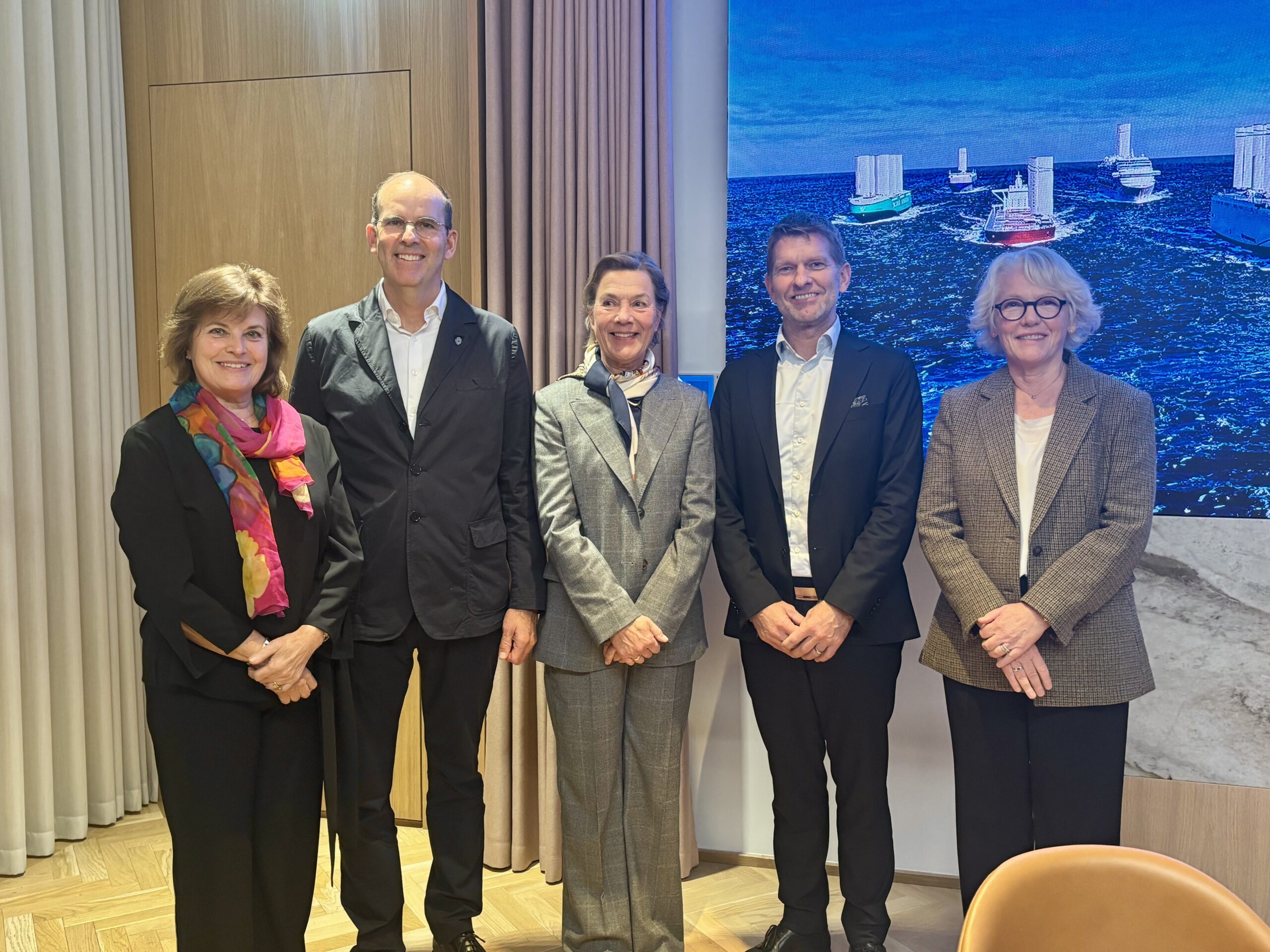
Speakers, left to right: Leif Johansson, Göran Eriksson, Nina Macpherson, Jacob Lund, David Ekelund, Lena Gipperth, moderator Mikael Mellberg.
Largely, the actions covered by the concept of ecocide are already criminal offenses in Sweden, showed Lena Gipperth, professor of environmental law at the University of Gothenburg.
“The provisions of the Swedish Environmental Code and the Criminal Code mean that what is defined as ecocide is essentially already covered, but for ecocide to become a crime under international law in Sweden, it should be introduced as a specific offense with clear criteria for what constitutes systematic and extensive environmental destruction”, said Lena Gipperth.

In a panel discussion, David Ekelund, founder and CEO of Icebug, highlighted business’ moral dimension. A common, global baseline for business would make a significant difference:
“Some successful business models rely on limited transparency in how production takes place. A common baseline would do a lot to improve the situation.”
 Göran Eriksson, CEO of the Port of Gothenburg, emphasized that, in general, global environmental legislation is needed to prevent problems from being exported between continents.
“Supporting this initiative feels like an obvious choice!”
 Jacob Lund, Head of Sustainability, Communications Director, and member of the management team at Investor, stressed that the issue of ecocide is important and the right thing to do.
When asked about the role of businesses at a time of geopolitical uncertainty, Jacob Lund responded that Investor continues to inspire its companies to operate in an environmentally and climate-conscious manner:
“Companies that do not transition will become obsolete or face major challenges in the future.”
Nina Macpherson noted that companies that have made long-term investments for the environment will not back down. Those who are working seriously to reduce emissions, for example, will not change their strategy just because politicians suddenly say something different.
The discussion also touched upon what important values ecocide law would help protect.
“Ecocide perhaps primarily protects biodiversity and human rights. Strong biodiversity also helps us to better manage the climate changes we are facing”, said Nina Macpherson.
Ecocide Law supporter Scandinavian Enviro Systems was there in force. Left to right: Former CEO Thomas Sörensson, CFO Fredrik Aaben, CEO Fredrik Emilson.

Our thanks to Advokatfirman Lindahl for hosting this event.


Driving forces at Lindahl: Johanna Lindqvist and Izabell Zaza.